

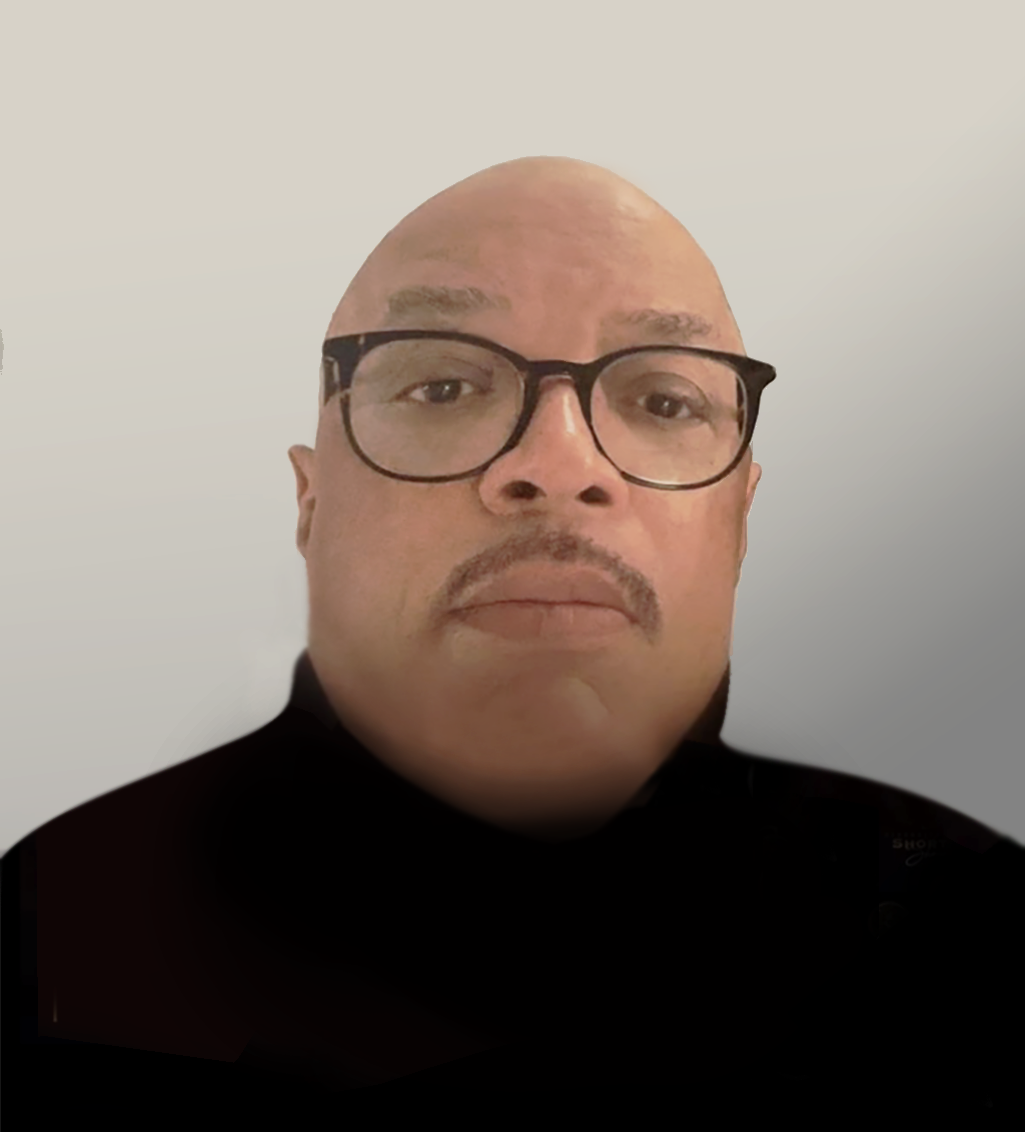
There is a difference between having multiple interests and building a life in which those interests actually have room to grow. Ken Mask, MD has spent decades doing the latter. Known professionally as a board-certified diagnostic radiologist and Fellow of the American College of Radiology, Mask could have allowed medicine to become the complete definition of his career. Instead, he continued developing ideas across filmmaking, literature, visual art, children's education, gaming, and community service, creating a body of work that demonstrates how reinvention can become an ongoing practice rather than a single dramatic career change.
That philosophy is captured directly in The 180 Rule of Motivation & Etc., one of Mask's most revealing literary projects. The book does not follow the structure of a traditional motivational title, just as Mask's career does not follow the structure of a traditional professional biography. It combines essays, personal letters, poetry, and a full-length stage play, allowing different forms of writing to coexist inside the same project. At the center of it all is a principle that Mask has repeatedly applied throughout his own life: when something becomes an obstacle, change the way you approach it.
"The 180 Rule is simple: take whatever is blocking you and flip it. Fear becomes fuel. Doubt becomes determination. That's how I've approached every project — in medicine and outside of it," Mask explains. That statement provides a useful framework for understanding why someone with an established medical career would continue pursuing so many seemingly unrelated creative disciplines. Mask does not appear to view creativity as an escape from his professional identity. Instead, it functions as another expression of the curiosity, discipline, and problem-solving that have shaped his life.
His educational journey provides some context for that mindset. Before attending Duke University School of Medicine, Mask earned undergraduate honors in Philosophy from UNC Chapel Hill. Philosophy encourages questions about ideas that many people accept without examination, while medicine requires careful observation and the ability to make sense of complex information. Those two foundations may help explain why Mask's creative projects so often begin with questions, problems, or familiar ideas that he believes can be reconsidered from another direction.
One of the strongest examples did not originate in a studio, hospital, or business meeting. It happened while Mask was playing tic-tac-toe with his young son Joshua. Joshua wanted to know why his older sister Kenya could not join the game. When his father explained that tic-tac-toe was designed for two players, Joshua asked the more important question: why couldn't it be for three? Rather than simply explaining the traditional rules again, Mask took the question seriously enough to develop a different solution.
That solution became Tic Tac Mo, a three-player reimagining of tic-tac-toe that introduces Y alongside the traditional X and O. On the surface, the project is a game. At a deeper level, however, its origin closely mirrors the philosophy behind The 180 Rule. A limitation appeared, someone questioned it, and Mask responded by changing the structure rather than accepting the restriction. What could have remained a brief conversation between a father and son became a product available to players beyond their family.
Fatherhood has inspired more than one branch of Mask's creative work. The Griffin the Dragon children's series began after Joshua won a stuffed dragon at a county fair in Lafayette, Louisiana, in 2011 and named it Griffin. Joshua and his sister Kenya eventually became co-authors with their father, helping build stories that use the character to explore subjects including chess, healthy eating, and dealing with bullying. Illustrated by Simmie Williams, the series demonstrates Mask's interest in creating children's entertainment that can simultaneously support literacy, character development, and critical thinking.
His commitment to young readers extends into community service through Books To You, the children's literacy nonprofit he founded in New Orleans. The organization distributes books to children, turning the educational principles found throughout Mask's creative projects into tangible community action. His children's books can encourage reading, but the nonprofit addresses another part of the equation by helping make books accessible in the first place. That combination of creativity and action is an important part of understanding his larger body of work.
The same philosophy appears through Mask's relationship with chess. Instead of treating chess as simply a competitive game, he has repeatedly used it as a vehicle for history, education, filmmaking, and children's development. His 2019 film Scandalous Moves, centered on legendary chess figure Paul Morphy against the backdrop of 1850s New Orleans, earned the Filmmaker's Choice Award at the San Diego Black Film Festival. The project demonstrated how an intellectual game could become the foundation for historical cinematic storytelling.
In 2023, Building Minds with Chess approached the subject from another direction by examining the cognitive and social benefits chess can offer children. The documentary earned Official Selection recognition at the New Orleans Film Festival and the Diversity in Cannes Short Film Showcase in Cannes, France. Chess also appears in Chess: The Quiet War and the children's title Griffin the Dragon and the Game of Chess for Kids, making the game one of the most consistent themes across Mask's work. Each project takes the same fundamental subject and turns it slightly, revealing another perspective.
Mask has applied that same willingness to experiment to his visual art. His paintings span jazz abstraction and portraiture, including the Faceless Genius series, which reimagines figures such as Beethoven, Mozart, Johann Sebastian Bach, and Michael Jackson through movement, color, and emotion. By removing conventional facial representation, Mask shifts attention away from simple recognition and toward interpretation. The viewer is invited to experience the idea and energy of the subject rather than being given every visual answer.
His artwork has since traveled from the United States to international audiences. Through his collaboration with curator Gatsby Randolph, Mask's work has been exhibited at Duck Walk Vineyards in the Hamptons as part of the From Harlem to the Hamptons show and through private exhibitions across the Côte d'Azur and Europe. That reach places his paintings in a very different environment from his medical work, children's literature, or film projects, but the creative philosophy behind them remains connected.
Perhaps that is why the idea of a Renaissance man fits Mask particularly well. The description is not simply about accumulating titles. It describes a person whose curiosity continues moving between disciplines and whose knowledge in one area can inform exploration in another. Mask's experience in medicine requires precision and discipline, his philosophical background encourages questions, his filmmaking requires storytelling, his paintings depend on interpretation, and his work with children demands the ability to communicate ideas in ways younger audiences can understand.
The most significant lesson within The 180 Rule may therefore be visible outside the pages of the book itself. Mask's career demonstrates what the philosophy looks like when practiced over time. A rule excluding a third player becomes a new game. A stuffed dragon becomes a children's series. Chess becomes a film, documentary, educational tool, and literary subject. A physician becomes a filmmaker and painter without ceasing to be a physician. Obstacles and boundaries repeatedly become starting points rather than conclusions.
Ken Mask, MD has built a creative life around refusing to believe that achievement in one area requires the abandonment of every other possibility. His work does not ask people to reject structure or discipline; it suggests that those qualities can become the foundation from which experimentation begins. The 180 Rule may be presented as a motivational philosophy, but Mask's own career has become one of its strongest examples. When the path in front of him has appeared limited, his response has repeatedly been to look in another direction and create something there.
Connect With Ken Mask, MD
Main Website: https://kenmask.com
Ken Mask Studios: https://kenmaskstudios.com
Tic Tac Mo: https://tictacmo.com
IMDb: https://imdb.com/name/nm5157841
Instagram: https://instagram.com/kenmaskmd
Facebook: https://facebook.com/ken.mask.1
LinkedIn: https://linkedin.com/in/ken-mask-md-8346484
Books: https://amazon.com — Search "Ken Mask"
Films: https://vyretv.com — Search "Scandalous Moves"